A place of history & character
Widely regarded as one of Dorset’s most iconic pubs, The World’s End Inn is rich in character and steeped in centuries of history. Having welcomed travellers and locals alike for almost 600 years, it is rumoured to be the oldest pub in Dorset and believed to have held the county’s very first beer licence.
With a colourful past, the inn was once a haunt for smugglers, with contraband brought inland from the Purbeck coast during the 1700s. Over the years it is also said to have housed a butcher and operated under a ‘Gilbert & Baker’ licence, allowing auctions to be held and bread to be baked on site. The original bread oven beside the impressive inglenook fireplace survived until a devastating fire in 1991 took hold, as did the legendary ‘highwayman’s bolthole’, said to have offered a secret escape from the law.

Military connections
Throughout the 20th century, The World’s End Inn became a popular stopping point for Royal Navy personnel travelling between Portsmouth and Plymouth. The Stable Bar was a particular favourite, where generations of sailors left behind memorabilia and etched their names upon the walls — a tradition that had left an indelible mark on the pub’s character, until it was lost to fire. To this day, the inn remains a much-loved refuge for travellers passing through the Dorset countryside.
Legend has long suggested that during the Second World War, Winston Churchill and General Dwight D. Eisenhower met at the inn to discuss preparations for D-Day — a story that grew with each post-war landlord. It was later rumoured that Churchill, Eisenhower and Field Marshal Montgomery once sat on the lawn in 1944 to plan the invasion. While this tale has become part of the pub’s folklore, a genuine historical connection was later confirmed when Montgomery himself verified that he had indeed visited the inn, albeit after his return from Dunkirk, during his time overseeing the defence of Hampshire and Dorset.

Restored from the ashes
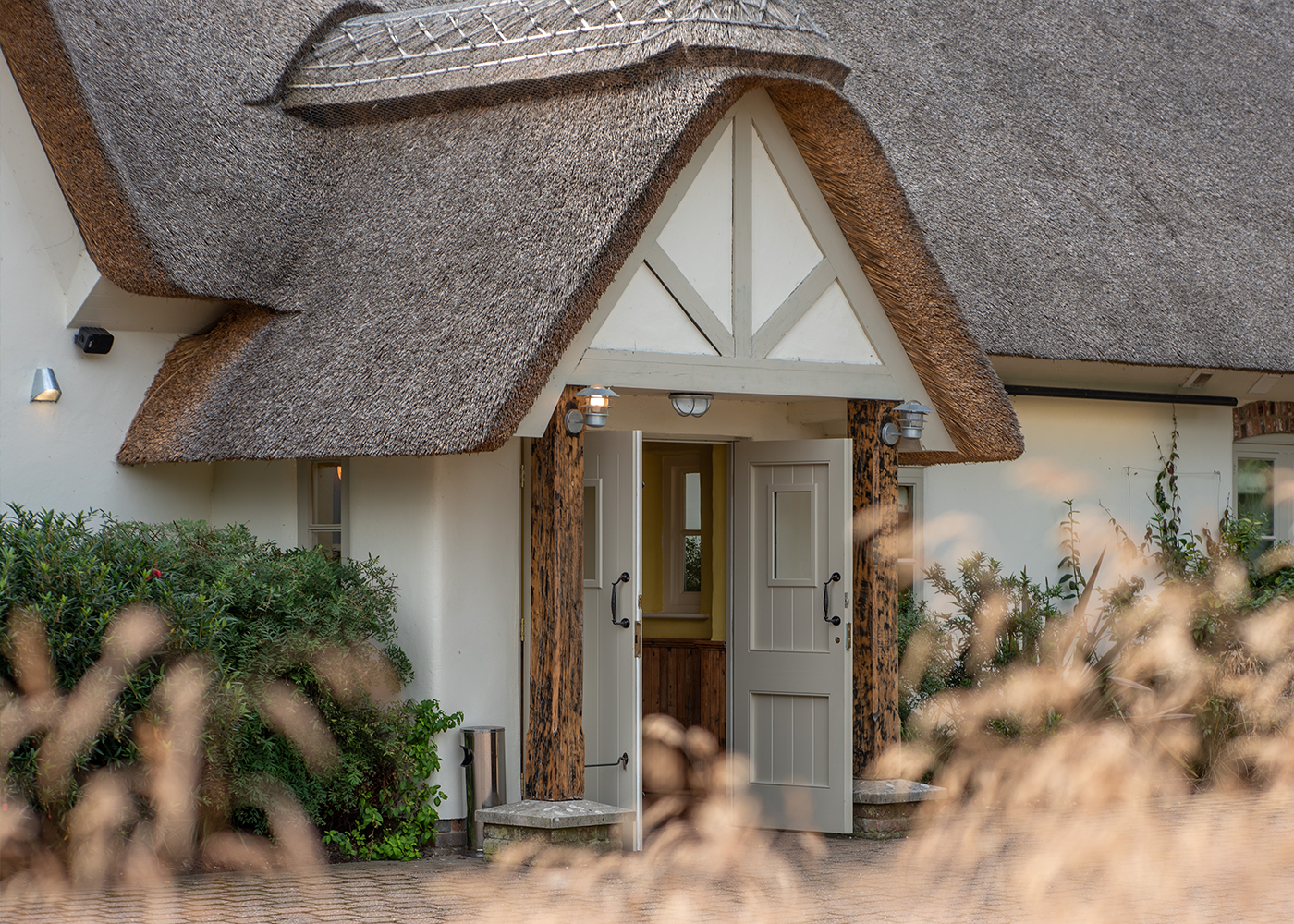
The charming, thatched building we see today has a richly chequered past. Long-held local folklore suggests that timbers from the Spanish Armada were once incorporated into parts of the original 14th-century structure, though these were sadly lost when the pub was destroyed by fire some 35 years ago.
The inn was later sensitively rebuilt in the spirit of the original design, preserving its traditional thatched exterior and restoring a wonderfully historic interior. With its wood panelling, open fires and ancient beams, the building now stands proudly once more, welcoming visitors from across the world.